



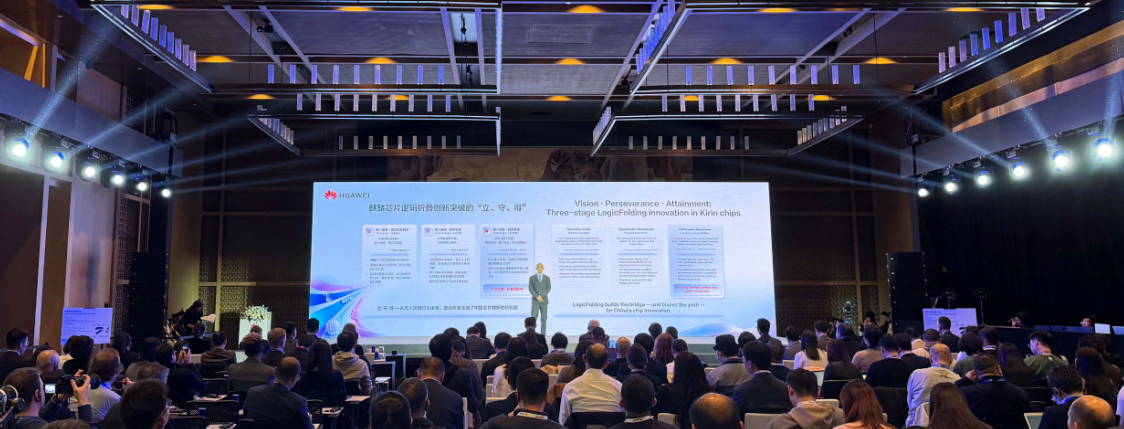
Huawei reported more than $6.9 billion in cumulative patent licensing agreements at its seventh Innovation and Intellectual Property Forum on November 24. Its patent licensing revenue reached approximately $800 million in 2025, up nearly 27% from $630 million in 2024. The company also signed agreements with 20 new licensees during the year, covering industries such as semiconductors, consumer electronics, automotive, and streaming.
The figures highlight the scale of Huawei’s existing patent business, much of which is built on mobile communications. At this year’s forum, however, AI computing, chip interconnects, optical networking, and 6G received considerable attention.
What Is OSTA? Huawei’s New Smartphone Brand Explained
Huawei’s Patent Licensing Business
The $6.9 billion and $800 million figures represent different measures. The former is the cumulative value of Huawei’s outbound patent licensing agreements, while the latter is its 2025 licensing revenue.
Huawei said its intellectual property business moved into a positive net income position in 2021. Its patent portfolio now covers a wide range of products. By the end of 2025, its patent licensing agreements covered more than 3.2 billion 5G devices, 1.6 billion Wi-Fi consumer electronics devices, and 4.1 billion multimedia devices.
The 20 new licensees added in 2025 came from six sectors: network and communications equipment, consumer electronics and computing, the Internet of Things, automotive, streaming, and semiconductors. The semiconductor sector is particularly relevant as Huawei expands its research into chip design and AI computing hardware.
AI Computing Takes a Larger Role
Wireless communications account for 41% of Huawei’s active granted patents. Terminal devices represent 16%, while AI and computing make up 13%.
At the November forum, Huawei highlighted several technologies in these areas, including the Tau (τ) Scaling Law, the UnifiedBus architecture, near-packaged optics (NPO), and 6G. Each addresses a different challenge in developing advanced computing systems.
One focus was LogicFolding, a technology associated with Huawei’s Tau Scaling Law research. Inspired by traditional Chinese mortise-and-tenon joints, the approach uses hybrid bonding to connect chip components over very short distances. This is relevant as the industry moves toward chiplets and 3D integration, where connections between stacked chip layers can significantly affect performance.
Smaller manufacturing processes are becoming harder and more expensive to develop. Advanced packaging offers another way to improve chip performance. Huawei is exploring how hybrid bonding can help.
UnifiedBus addresses communication between chips and computing nodes. In large AI clusters with thousands of accelerators, data must move quickly between processors, memory, and storage systems. Huawei’s work covers multi-chip interconnects, PCIe, high-performance networking, and storage networks, drawing on its communications infrastructure experience.
Optical interconnects present a different challenge. AI data centers need increasingly high bandwidth, while power consumption and the limitations of electrical connections remain major concerns. Huawei has applied more than 30 years of optical communications experience to this area. Its Hi-ONE NPO optical engine has entered commercial deployment, the company said.
What the New Patents Could Mean for Huawei
Huawei has used its cellular patents in licensing agreements with major smartphone companies. Its research into AI computing, chip packaging, and optical interconnects could give it additional technologies to license as these markets develop. However, the latest licensing figures do not show how much revenue comes from these newer fields.
Huawei Fellow and IEEE Fellow Peiying Zhu said at the forum that a patent’s value comes from the technical breakthroughs behind it. She also stressed the importance of sustained research in building a company’s intellectual property position.
Huawei has maintained substantial R&D investment over the years, with spending exceeding 20% of revenue annually over the past five years. Its research now spans wireless standards, chip architecture, high-speed interconnects, and optical technologies.
The forum also featured cooperation with external companies. Representatives from Phlexing Technology and Japan’s Yamaichi Electronics discussed their work with Huawei on Tau-related electronic design automation tools and NPO technology. Huawei also referred to fair, reasonable, and non-discriminatory (FRAND) licensing principles in its approach to technology cooperation.
The commercial test will come when chipmakers and data center operators choose the interconnect technologies for their next-generation AI systems. Will Huawei’s UnifiedBus architecture and Hi-ONE optical engine become part of those deployments?