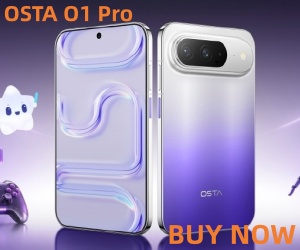


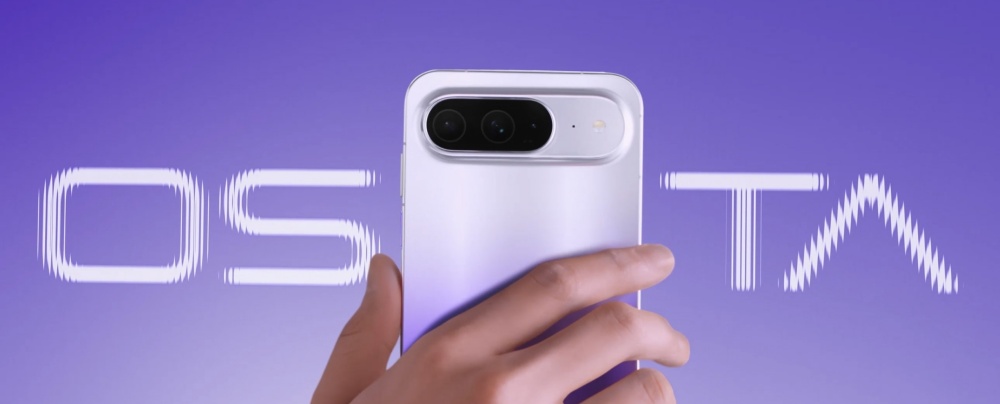
Huawei’s OSTA O1 Pro went on sale in China on November 20, with a starting launch price of CNY 5,499. After applicable government subsidies, the starting price drops to CNY 4,999. Soon after the launch, OSTA General Manager Liu He shared an update on Weibo, saying that all 16GB RAM models had sold out across major platforms by midnight. The 12GB versions also saw strong demand, with stock remaining at only some stores and retail partners.
Liu also explained why OSTA chose Huawei’s Kirin 9030S for its first smartphone. He pointed to AI performance, power consumption, and the need to keep the phone’s price competitive.
Why OSTA Chose the Kirin 9030S
The OSTA O1 Pro uses the same Kirin 9030S processor as the Huawei Pura X View. Liu said the decision reflected the team’s priorities for the phone.
AI capabilities: OSTA wants AI to play a central role in its products. The O1 Pro runs HarmonyOS 7 and includes system-level AI agents. According to Liu, the Kirin 9030S offers NPU optimizations for AI workloads. This was an important consideration for OSTA, which is positioning the O1 Pro around system-level AI features rather than conventional hardware specifications alone.
Power efficiency: The phone packs a 7,000mAh battery into a body measuring just 6.68mm thick. Liu said power consumption was an important consideration when selecting the processor, given the combination of a large battery and slim design.
Cost control: Price was another consideration. Liu said the team worked to keep the subsidized starting price at around CNY 4,999. Liu said the processor’s pricing was one factor in keeping the phone’s subsidized starting price close to CNY 4,999.
16GB Model Sells Out After Launch
Liu said OSTA had underestimated demand when planning initial inventory for the 16GB model, which sold out shortly after launch. The company is now adjusting production to meet demand for different configurations. The 12GB version remains available at some retailers while stocks last.
OSTA has not released official shipment figures or a breakdown of sales by configuration. The reported sellout therefore does not reveal how many units the company has sold. It does, however, show that the 16GB version attracted strong interest from early buyers.
How OSTA’s Strategy Differs from Honor’s Magic Series
Liu compared OSTA’s approach with Honor’s early development of the Magic series. Honor initially used Magic to introduce new technologies and interaction features before bringing some of them to other products. Liu compared OSTA’s approach with the early development of Honor’s Magic series, suggesting that both brands place an emphasis on exploring new technologies and user experiences..
The two brands differ in how they are organized. Magic started as a product line within Honor, while OSTA operates as a separate brand with its own product planning and community operations. Liu also said its R&D team is becoming increasingly independent. That setup lets OSTA develop its own product direction while continuing to use Huawei technologies such as Kirin processors and HarmonyOS.
Competing in the CNY 5,000 Market
At CNY 4,999 after subsidies, the O1 Pro enters a competitive price range. It faces Huawei’s own flagship phones as well as Android models from other manufacturers.
Its hardware includes a flat display, a 6.68mm body, a 7,000mAh battery, a 200MP main camera, and a periscope telephoto camera. HarmonyOS 7 is another key part of the package.
The initial sellout suggests that the 16GB model has attracted considerable interest. Whether OSTA can maintain that momentum will depend partly on how quickly it replenishes stock and how well its AI features perform in everyday use.